

How a Leading Healthcare Group Improved Patient
Engagement and Follow-Up Efficiency
1 Background & Challenges
As one of China’s leading healthcare groups, the organization operates multiple general hospitals, specialty clinics, and health management centers, serving millions of patients every year. With the expansion of outpatient services and preventive healthcare programs, maintaining timely and effective communication throughout the patient journey became increasingly challenging.
Every day, medical staff were responsible for a large volume of appointment confirmations, post-operative follow-ups, vaccination reminders, and health education activities. Most of these tasks relied on nurses and administrative teams making manual phone calls, which created a significant operational burden.
Missed appointments and delayed follow-ups were among the group’s biggest concerns. Patients frequently forgot scheduled consultations, failed to attend follow-up visits, or missed important vaccination dates. Meanwhile, post-operative care teams struggled to maintain consistent communication with discharged patients, especially during peak periods.
The healthcare group needed a more efficient and standardized way to manage routine patient outreach while allowing healthcare professionals to dedicate more time to direct patient care.
2 Solution
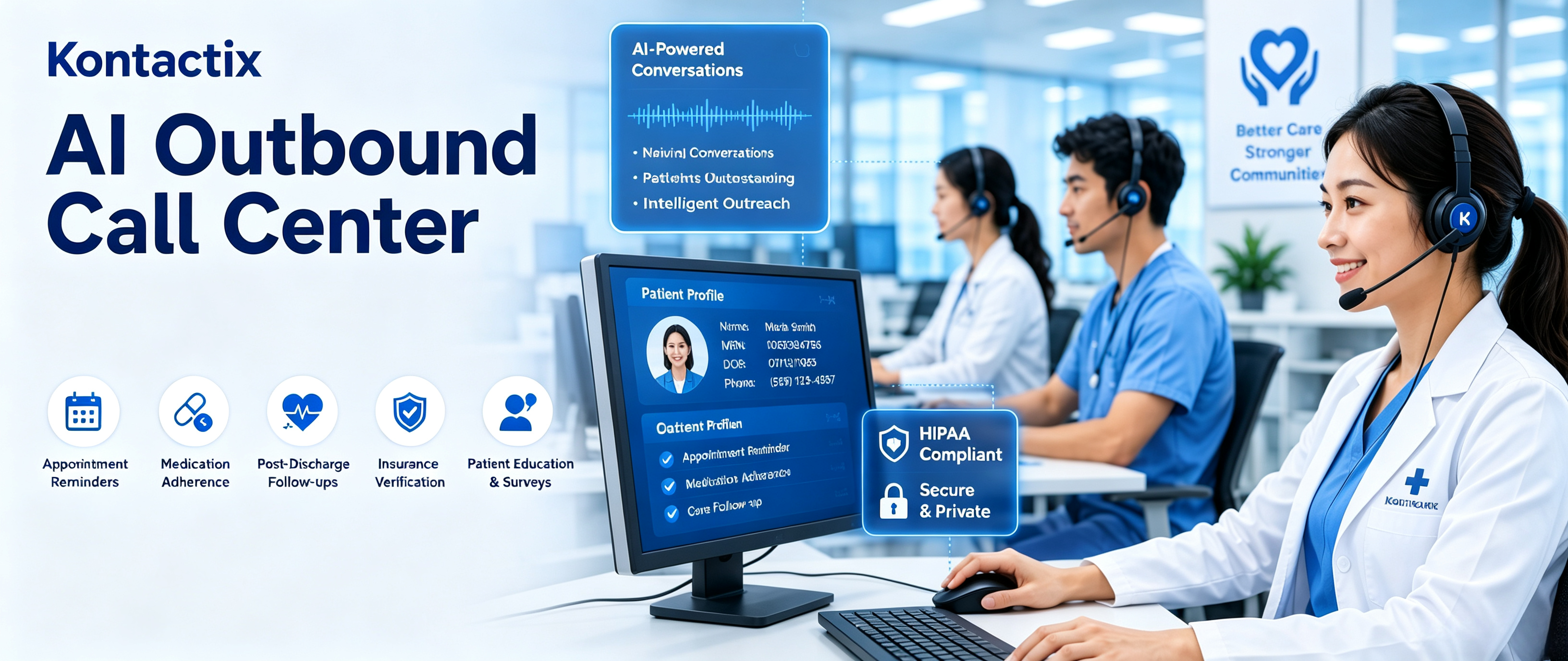
To improve patient communication and operational efficiency, the healthcare group deployed the Kontactix AI Outbound Call Center and integrated it with its Hospital Information System (HIS), appointment scheduling platform, and patient management systems.
The solution supports multiple healthcare scenarios, including appointment reminders, vaccination notifications, post-operative follow-ups, and health education campaigns.
"Automating administrative patient interactions allows clinic teams and specialized nursing staff to fully focus on active recovery protocols, clinical quality, and empathetic hands-on care."
Prior to appointments, patients receive automated reminders containing visit details, preparation instructions, and options to confirm or reschedule. This allows hospitals to optimize scheduling and reduce unused appointment slots.
For patients recovering from surgery or specialized treatments, the system conducts follow-up calls to collect information about recovery progress, medication adherence, and potential complications. Patients who require additional support can be referred to medical staff for further consultation.
The platform is also used to manage seasonal vaccination campaigns and public health initiatives, helping hospitals notify eligible patients, confirm appointments, and provide post-vaccination guidance.
In addition, healthcare providers can deliver personalized health education programs covering chronic disease management, rehabilitation, preventive care, and wellness recommendations, strengthening long-term patient engagement.
3 Solution Highlights
Reduce Missed Appointments and Improve Scheduling Efficiency
Automated appointment reminders help patients confirm, cancel, or reschedule visits in advance, reducing no-show rates and improving the utilization of medical resources.
Strengthen Post-Operative Care
Structured follow-up programs enable hospitals to stay connected with patients after discharge, improving continuity of care and helping identify issues that may require additional attention.
Support Large-Scale Vaccination Campaigns
The solution helps healthcare providers efficiently manage vaccination notifications, appointment coordination, and patient communications during seasonal vaccination programs.
Extend Care Beyond Clinical Visits
Through regular health education and wellness outreach, hospitals can maintain ongoing engagement with patients and encourage healthier behaviors outside the clinical setting.
Reduce Administrative Workloads
By automating repetitive communication tasks, nurses and care coordinators can focus more on patient care, complex cases, and clinical services.
4 Customer Results
Following deployment, the healthcare group achieved measurable improvements in both patient engagement and operational performance:
The healthcare group also reported better coordination between clinical departments and administrative teams, enabling a more proactive and patient-centered service model.
5 Conclusion
For modern healthcare organizations, patient care extends well beyond hospital visits. Effective communication before, during, and after treatment plays a critical role in improving patient outcomes and optimizing healthcare resources.
By implementing intelligent outbound communications, this leading healthcare group established a more connected and efficient patient engagement model across appointment management, post-operative care, vaccination programs, and health education initiatives.
Today, the organization continues to expand its digital healthcare services, delivering more convenient, responsive, and personalized experiences for patients throughout their healthcare journey.


